

It’s just after 10.30am, and Dean’s eyes are filled with sleep. Stooping in his doorway, he mumbles that I should come back later. His Italian mastiff, Stella, grizzles dozily from within. It seems I’ve woken her up too. “I don’t have a proper bedtime; my routine is weird,” Dean (which isn’t his real name) tells me. He usually tries, though, to wake up by 10am, and take long dog walks to get him out. “There’s not much discipline in my life, so I have to discipline myself instead.”
I’m on a terraced street on the outskirts of Blackpool town centre, trying to work out what a day in the life is like for Britain’s Neets: the 16- to 24-year-olds not in education, employment or training. Around one in eight young people are now Neets, with the overall figure reaching 957,000 earlier this year. Weighing factors such as health, geography, parenting and socio-economic background, researchers can now predict whether a child as young as three will end up Neet at the age of 16.
Neets have always been around – the rate hasn’t fallen below 10 per cent for three decades – but politicians are panicking about them now. This is because the nature of Neethood has changed: they’re now more likely to be men (rather than young mothers whose babies kept them out of education or work), and they’re less likely to be seeking work at all. Sixty-one per cent are not looking for a job. This is known in the distant language of Whitehall as “economic inactivity”, and is partly driven by illness – nearly a quarter of Neets say they are not looking for work because of health conditions, chiefly citing mental illness, learning difficulties and neurodivergence.
Britain spends more on health and disability benefits for 16- to 24-year-olds than it does on apprenticeships. Labour has just announced it will pay employers £3,000 per Neet hire, but is simultaneously making it more expensive to recruit young people by increasing their minimum wage. Employers complain of skills shortages in the expectation of net negative migration, but Britain’s youth represent a near million-strong missing workforce.

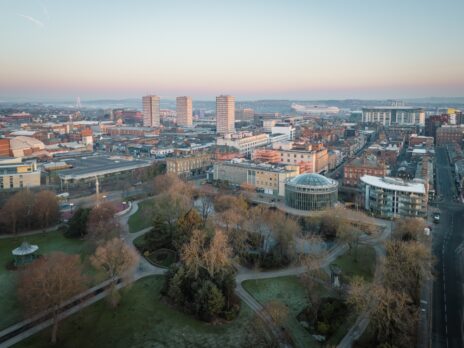
Blackpool is the epicentre of this trend. Its seafront tower stands sentinel above a lost generation: 20.8 per cent of young women and 21.7 per cent of young men now in this coastal Lancashire town are classed as Neets.
At Dean’s place, the office-beige slatted blinds are still closed. Outside sits a mattress, along with a solitary trainer and disused frying pan. Inside, stale smoke and the metallic spritz of deodorant hang in the air. A sofa lines one side of the living room, which is furnished with portable clothes rails and shoe racks. A television the size of the wall is the one thing that catches the little light seeping in.
Dean, 21, wears a black hoodie and heavy eyelids. His hair is a sandy fuzz that hangs in his eyes, not shaven into the typical neat fade favoured by the boys of Blackpool. He bunks between the unoccupied house owned by his aunt, where I find him, and his mum’s house further out of town. When arranging our interview, he couldn’t spell his address for me and said he preferred calls to texts, citing dyslexia. He doesn’t have his own phone; when I called, his baffled friend whose number he’d given me picked up.
Dean began working at 13 on a paper round, and from then on had jobs as a labourer and in pubs, working his way up to earning £12.50 an hour as a shift manager at a Wetherspoon’s. He stuck it out at school, though he found it “genuinely pointless”. He earned a vehicle-body repair diploma at college and got a job fixing cars. But he broke his ankle on a toe jack, and it kept flaring up during long working days. He left. It was around that time that he dislocated his shoulder, meaning he also had to give up his favourite pastime, mixed martial arts.
He hasn’t been studying or working for a year. His girlfriend broke up with him two weeks ago. He worries about his mum; he cared for her when she was having breast cancer treatment, looking after her then six-month-old baby at the same time. He watches Ultimate Fighting Championship bouts late into the night and struggles to sleep as he doesn’t “burn off enough energy” in the day. He doesn’t play videogames or watch porn, he says, but says he knows of lads who sit at home in that daze. His ex, also a Neet, would shut herself away in her room, on social media all day.
Dean and his ex had been claiming benefits together under the same address. After the break-up, he moved out and his benefits payments have stopped for now. He has no money for treats or trips or days out. His self-esteem is low. Employers, he worries, would take one look at him and judge they wouldn’t want a man like him. “Nowadays everyone’s so quick to judge you on the way you look, especially round here. They look at a younger lad dressed a certain way, and think you’re going to be hurting someone when you’re not.” He tells me his mental health has suffered, but he hasn’t had any official assessment or diagnosis: the waiting lists are long. “Mental health around here is literally terrible, for our generation and for everyone. It’s such a depressing place.”
A narrative about “over-diagnosis” and a “snowflake” generation of young people too sensitive to life’s struggles drives much of the political rhetoric about Neets – and the UK’s rising sickness-benefits bill. But the young people I spoke to seemed tougher than most – much tougher than I was at their age. I felt the hostile world they’d grown up in had aged them, rather than suspended them in idle youth.
The pandemic froze their formative years in unnatural isolation. They were critical of a politics they saw as “only looking after older people”, schooling that left them “totally unprepared” for the adult world and a brutal labour market – where entry-level jobs are vanishing, vacancies in hospitality and retail are falling and understaffed sectors like care are chronically underpaid.
Further towards the seafront, I meet an 18-year-old care worker called Robyn on her day off. Wearing a black hoodie, wide smile and more yellow-gold piercings than I can log an accurate count of in my notebook, she also speaks of a depressed and anxious generation. She missed nearly five years of school because of mental illness, only managing to turn her life around with a course in health and social care at Blackpool and the Fylde College, which allowed her to do sessions from home. “When I wasn’t in school and wasn’t working, I would sleep all day and be awake all night,” she says. “Cry and self-harm is all I used to do.” She would also drink, smoke weed and take coke (ketamine was “massive” among her friends). To lurch from that life to working 15-hour shifts, four days a week, was a shock, and she’s unsure if she’ll stay in care work. But she knows for sure that the flexibility of college, the maturity a working life demands – “things like organising car insurance!” she laughs – and having wages helped her escape the Neet trap. She is saving up for a trip to Australia.
The young people I met also blamed Blackpool itself for the rise in Neets. Place is a big determinant of Neethood. They speak of a world where no one, other than the college and drug dealers, offers much for them. Even the Reform UK pub in Blackpool rejects the left-behind it is supposed to serve: “No Hoodies” reads a sign on the door.
“I think it’s just so easy to tell a story of ‘they’re less resilient, they’re more snowflake-y, they’re softer’,” says Alan Milburn, the ex-New Labour health secretary whom the Work and Pensions Secretary and fellow Blairite Pat McFadden has appointed to review the Neet problem. “It’s no good blaming young people and saying somehow they’re responsible for this: it’s out of their control.” If there must be a “blame game”, Milburn looks to the labour market, and “a system that is letting them down… There is something going on here which is creating a more anxious generation.” Welfare isn’t helping either. “We’re spending money in a deadweight way,” he says, “on a rising benefits bill that everybody knows is not sustainable”.
We meet in a mousetrap-laden corner of Caxton House, the concrete-gridded fortress of the Department for Work and Pensions. In his tasteful smart-casual – thick-framed glasses, funky patent brogues – Milburn feels like a relic of a shinier era sequestered in the dilapidated back room of the British state.
You feel it in his upbeat paean to social mobility, too. As a council estate boy, brought up by his single mother in Newcastle, he still remembers his sense of expectation that he was going to do better than his mum’s generation. “Now, for the first time in a hundred years, parents and grandparents are wondering whether the next generation are going to be better off than the previous generation,” he says. “The biggest shortage in Britain today is a shortage of hope.” Does he believe the social contract is broken? “Yes,” he replies. “I think it is breaking, and possibly broken.”
There have been 30 years of reviews, policy interventions and hand-wringing about Neets, and “none of it has really paid off”, says Milburn, who betrays the sense that something bigger needs to change than a review can propose. “In my view, the whole system needs a reset, and by the system I mean from early years through schools and skills into health and into welfare,” he says. “There’s got to be a change in mindset, and the mindset is: we’ve got to invest in the future generations.”
Scrap the pension triple lock, then? Pensioners receive 55 per cent of the welfare bill Labour failed to cut by reducing disability benefits last year. Milburn, who is 68, delicately describes the “interesting phenomenon” whereby his generation has “the guarantees of a triple lock, but there’s no such guarantee for young people. That’s a choice that politics and society have made.” Changing this would be a fight, as would many other plans that might lie in the review’s sights: trying to reform sickness and disability benefits again, reversing the commitment to bring the 18- to 20-year-old minimum wage rate up to adult levels, massive investment in early years education and parenting support. Keir Starmer’s wobbly leadership doesn’t seem up to the battle with Labour backbenchers, public opinion or the Treasury – all of which would be required.
“Because the government is weaker than many of us had hoped that it would be at this stage in the electoral cycle, it needs an agenda,” says Milburn. “It needs an agenda that is about the future, hope and optimism, and that is aligned with where public sentiment is. And on all three notes, this review strikes a chord. People want to have this fixed, and government would be very well-advised to listen to that mood.”
In 1993, the first piece of research about British Neets (who were back then known as “Status Zero”) was published about 16- and 17-year-old boys doing nothing with their lives, or making money through crime, in South Glamorgan, Wales. Dr Howard Williamson, the ethnographer behind the report who also advised Tony Blair’s Social Exclusion Unit and has dedicated his career to Neets, tells me “such a lot of bollocks is talked about this group”. We speak over FaceTime; he has a white ponytail, leather jacket and silver plectrum necklace. He looks like the kind of eccentric who can make surly teens open up by emanating no hint of bureaucratic smarm. For him, the issue is simple, and structural. “The reason it is intractable is that the labour market’s changing, and these are young people who, classically, got working-class jobs. And [the number of] working-class jobs are shrinking,” he says. “A technologically driven future labour market is going to have less and less room for those kinds of individuals.”
Milburn says employers have been on “easy street” with the ability to import trained-up, cheap labour. But Williamson is not convinced that Neets can simply take on migrants’ work. “You have politicians saying, ‘Well, they could go into care work for old people’s homes,’” he says. “But ‘fuck off, I’m not cleaning up shit’ will be their response. If you tripled the wages of somebody in a care home they might do it, but I’m just not sure whether the private sector has the absorption capacity to soak up that number of individuals.”
The Neet saga is a story of modern Britain. It touches on many of our current neuroses: the mental ill- health epidemic and ADHD and autism diagnosis boom; welfare spending; intergenerational unfairness; the ragged social contract. But it’s a stubborn old story, too. Of towns around the country – Blackpool, Hartlepool, Redcar – stuck at the top of gloomy deprivation league tables. Of government after government breaking promises to build a “northern powerhouse”, “level up” or spark “national renewal” then retreating to the same old Treasury spreadsheets and campaign strategies.
Before I leave Dean, he tells me his dreams – he wants a career in the car industry, a place of his own, to do mixed martial arts, find a missus. It all feels quite far away, though. “I want to get myself back in order so that I can focus,” he says. “But finding a job to apply for is hard, and getting hired is even harder. It seems nearly impossible now.”
[Further reading: Why Britain is so poor – and will get poorer]
Content from our partners

Related



This article appears in the 29 Apr 2026 issue of the New Statesman, The cover-up?
Join the debate
Subscribe here to comment